My Experience with Canva
Graphic creation has been a meaningful part of my educational journey, although it has not always been a smooth learning process. My relationship with visual design began in eighth grade when I created a pizza themed graphic in my information technology class. That graphic made its way into the school yearbook, and for a brief moment, I was convinced I was meant to pursue graphic design. When I continued with the course in high school, coding began to overwhelm me, and I eventually stepped away from the idea entirely.
Years later, while completing my undergraduate studies at the University of Victoria in 2019, I worked as the social media manager for the Indigenous Studies program. That was when I discovered Canva for the first time. I used it to design newsletters, promotional materials, and event announcements. I remember being surprised by how accessible the platform felt compared to the programs I had used earlier in life.
Returning to Canva as a Teacher Candidate
I did not revisit Canva until joining the Teacher Education Program. My first project was a slide presentation and soon after, as I began preparing for my six week practicum, I found myself using Canva constantly. I had unit plans to design, lesson materials to create, and a growing need for visuals that were both functional and engaging.
Canva became my primary tool for making worksheets, literacy activities, templates for a class created book, a scavenger hunt, and a variety of small classroom resources. I appreciated how flexible the platform was, although it did challenge me at times. Because I struggle to concentrate on tutorial videos, Canva became a learn as you go experience. Each project helped me build confidence, and every mistake taught me something useful. Looking back, I can see a clear progression in the quality of my work.
As a student teacher, I have a strong desire to design resources that align with my own teaching goals. Creating my own materials means I can tailor them to the specific needs of the learners in front of me rather than relying on a generic worksheet or activity.
The Graphic I Created
Below is the most recent graphic I created for an in situ learning experience. I designed it to support a hands on activity and to provide students with clear visual cues.
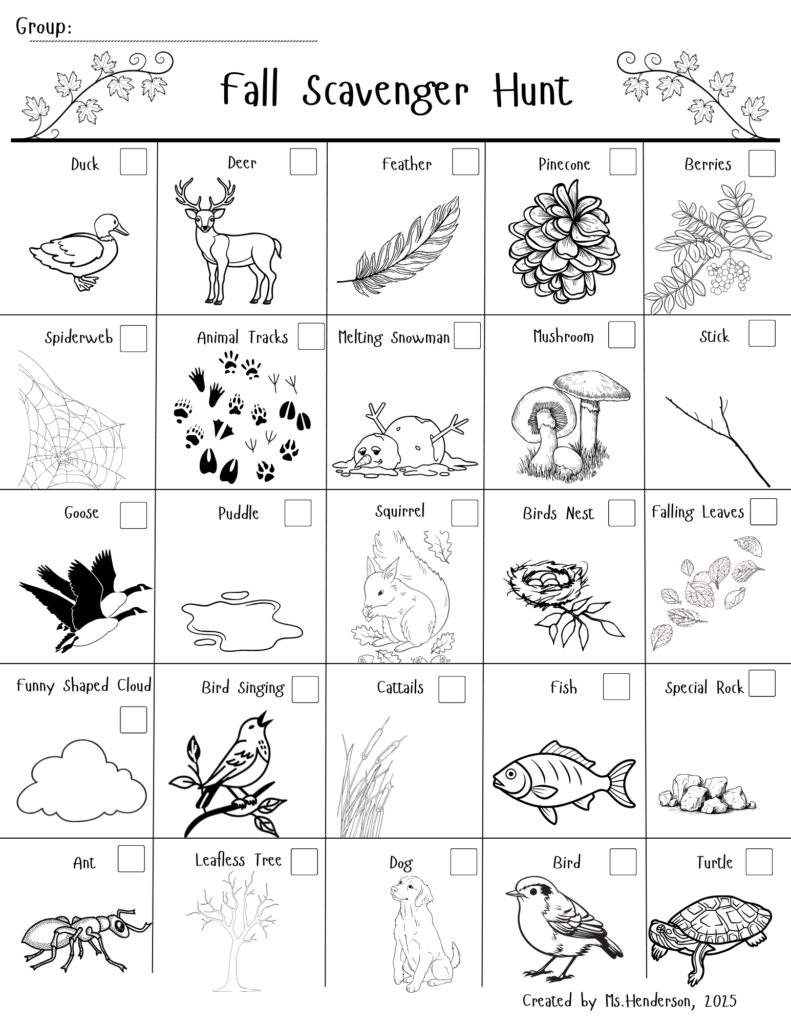
The process of creating this visual involved selecting a simple layout, choosing fonts that were easy to read, and using imagery that would guide students without overwhelming them. Canva allowed me to experiment with images, alignment, and spacing until the graphic matched the tone and purpose of the activity.
How I Envision Using Graphic Creation in the Classroom
I see graphic creation becoming a consistent part of my teaching practice. Visual supports are incredibly valuable in elementary settings, especially for students who are developing reading skills or who benefit from multimodal instruction. Thoughtfully designed graphics can:
Support clarity by breaking down instructions into manageable steps.
Create engagement by adding color, images, and structure that draw students in.
Promote independence by giving students visual tools they can follow without repeated reminders.
Enhance classroom routines through labels, posters, and visual schedules.
I hope to continue making my own resources because it allows me to respond directly to student needs. If I have a learner who thrives with visual prompts, I can create specialized supports. If my class is working on a collaborative project, I can design templates that encourage consistency and creativity. I know there are lots of resources already created, but at this point, I have specific criteria to follow in my head, as well as for my program, so I find Canva is much better suited to my needs.
Now what?
Graphic creation has become an unexpected but meaningful part of my teacher identity. Canva has remained my preferred platform because it is accessible, flexible, and always ready to adapt to whatever idea I bring to it. As I continue teaching, I plan to keep building a collection of personalized graphics and resources that grow alongside my students and my own developing practice.